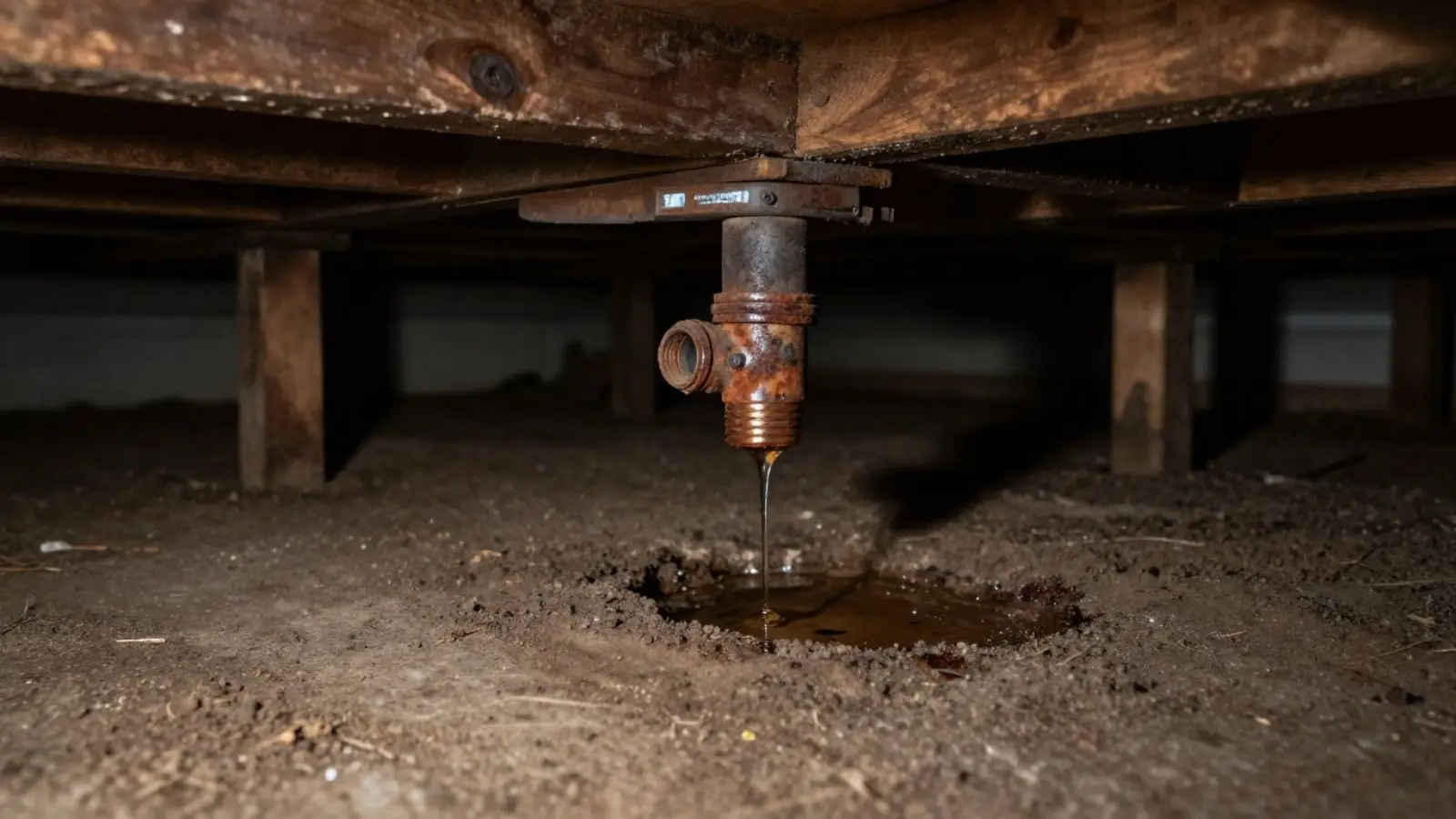
Crawl space water damage is water sitting in the shallow space between the soil and the floor of your house. In Littleton, CO, crawl spaces are less common than basements. They turn up mainly in older homes and in some additions built onto them.
That makes it easy to miss a problem for weeks, because nobody goes down there. Water in a crawl space does not stay there, since it works up into the floor joists, subfloor and the rooms above.
When water under the house is an emergency
Standing water that touches ducts, wiring or insulation is urgent. Wet wood framing can start to host mold in 24 to 48 hours, and a damp space rarely dries without help because it has little airflow.
Call right away if you see water through the access hatch, notice a sour smell inside, or feel soft spots in the floor above. We dispatch around the clock when a crew is available and will not promise an arrival time.
What you see above the floor and what it means
| Sign in the house | What may be happening below | Next step |
|---|---|---|
| Cold or damp floors | Wet insulation or standing water | Call us before opening the hatch |
| Musty smell near floor vents | Moisture and growth on joists or ducts | Close vents nearest the smell and call |
| Sagging or bouncy floor | Subfloor or joists saturated | Stay off the area and call |
| Gaps at baseboards or doors that stick | Wood swelling from long moisture | Photograph and call |
| Sound of running water under the house | A supply line or drain leaking below | Close the main and call a plumber |
Crawl space safety before anyone goes in
A crawl space is a confined space with wiring, ducts and sometimes standing water. Do not crawl into water while power is on to anything beneath the house. Turn off power from the panel only if you can reach it on dry ground.
- Close the main water shut-off if a pipe is the source.
- Keep children and pets away from the hatch.
- Never enter alone, and never enter if you smell gas or see sparking.
- Take photos from the opening before anything is disturbed.
- Call us and the plumber or utility as needed.
What we do not do
We do not install vapor barriers or encapsulation, and we do not regrade or handle drainage. If water keeps coming in, a drainage or waterproofing contractor fixes the cause while we deal with the damage.
How we pump and dry a crawl space
Pump out standing water
Submersible pumps and extraction units remove the water, and we log where it entered.
Remove wet insulation
Soaked batts hold water against joists and sag, so they come out first.
Dry the wood
Air movers and dehumidifiers run until joists and subfloor meet the readings in the ANSI/IICRC S500 drying approach.
Check and monitor
Moisture meters and a thermal camera track progress on each visit.
Odor means moisture is still present, so we treat the cause first and the smell second. If growth is already visible on the framing, we move to mold remediation, which follows its own containment steps.
Water under the floor or a damp smell from the vents? Call the 24/7 line and tell us what you can see.
Call (303) 952-8295What drives the cost of crawl space work
- Depth and volume of standing water.
- Access size, since a tight hatch slows equipment and crews.
- How much insulation and ducting is wet.
- How long the wood has been damp.
- How many days of drying and monitoring are needed.
Before any work starts, we explain what the job involves and what it will cost, so there are no surprises once we are under the house.
Insurance and mistakes to avoid
Colorado Division of Insurance advisories say most property policies do not cover flooding, while burst pipes and the resulting water damage are generally covered. Start a claim early, take steps to prevent more damage and get the insurer's instructions before repairs.
Common mistakes: leaving wet insulation in place, running a household fan down the hatch and hoping, sealing the space before it dries, or waiting weeks because the crawl space is out of sight. Ask your insurer about deadlines.
Littleton, CO: older homes, soils and creeks
Colorado Geological Survey notes that expansive soils start to swell when wet and that poor drainage is common. A crawl space with soil that stays damp after storms points to a drainage problem, so mention it to the drainage contractor you hire.
Littleton has historic districts including Louthan Heights and the Downtown Littleton Historic District. Older buildings often have original wood floors and older plumbing, so if your home is one, tell us before we lift boards and ask the city before you change the exterior.
Federal flood mapping from 1978 identified Big Dry Creek, Lee Gulch and Slaughterhouse Gulch as sources of flooding in the city. If your home sits near one of them, check the city's floodplain pages and your policy, since flood is usually a separate coverage.
Sources: Colorado Geological Survey, City of Littleton historic district and floodplain pages, State CWCB archive of the FEMA study.
We also dispatch to Englewood and Morrison for crawl space calls. If creek water was the source, flood damage restoration explains the contaminated-water steps, and water mitigation covers the first days.
Common questions
Yes, around the clock. Crawl space jobs involve tight access and wet insulation, so the dispatcher asks what you can see from the hatch before a crew is arranged. No arrival time is promised, and we ask you to stay out of standing water near wiring.
No. We pump, remove wet materials and dry the structure. Vapor barriers, encapsulation, grading and drainage belong to a waterproofing or drainage contractor.
You can remove standing water, but wet insulation, joists and subfloor still hold moisture. Without meters you cannot tell whether the wood is dry.
Drying usually takes several days, depending on how wet the wood is and how well air can move. We recheck readings and stop only when they hit target.
Crawl spaces are less common here than basements, so the cases are mostly older homes and additions. Damp soil, a leaking pipe or runoff after snowmelt can all send water under the floor.