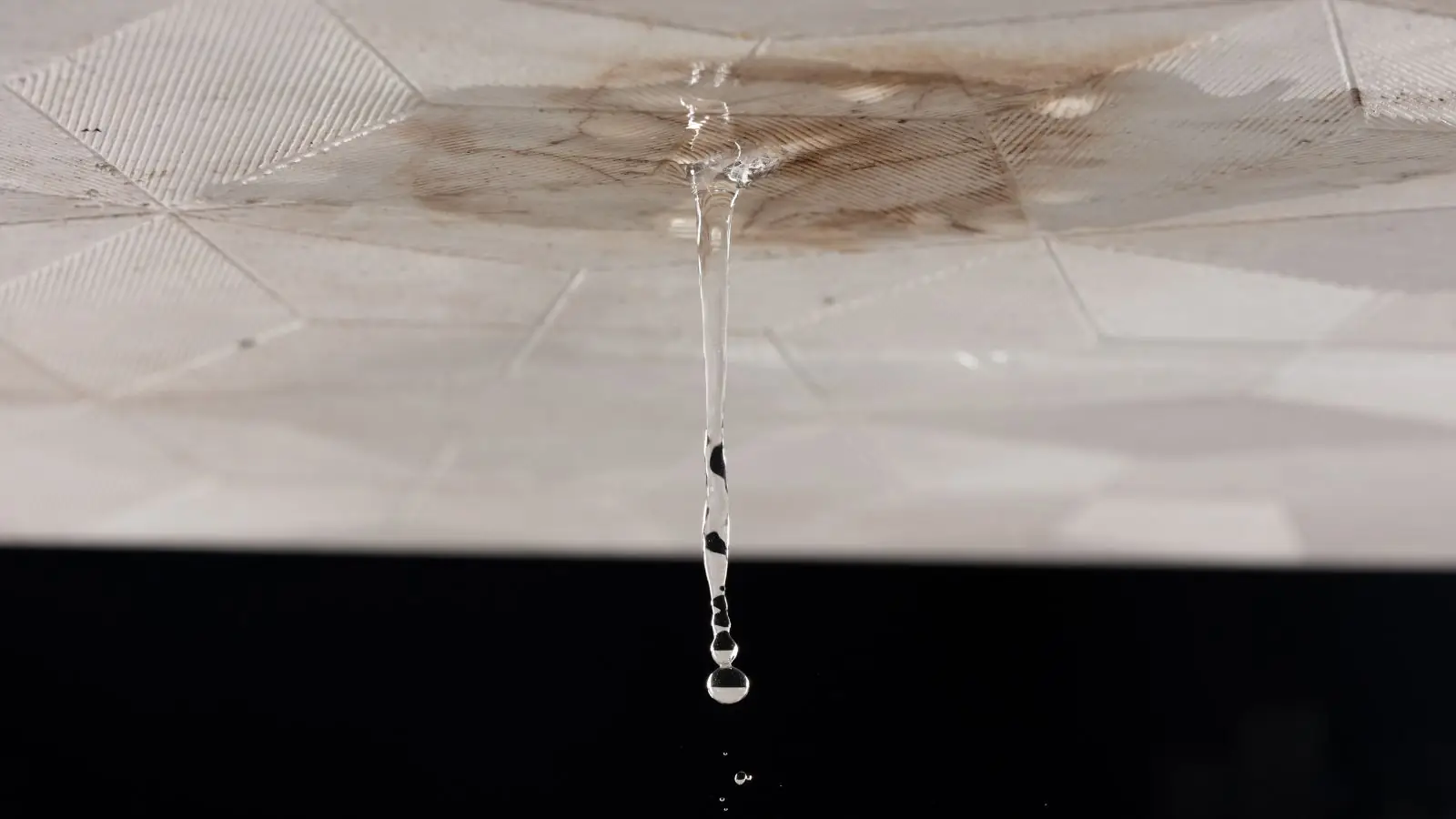
A roof leak lets water in from the top of the house, so the damage travels downward. It wets attic insulation first, then the ceiling drywall, then walls, floors and furniture below. By the time a stain appears, the water has often spread well beyond it.
We do not repair roofs. We remove the water and dry what it soaked in your Littleton, CO home, and a roofer fixes the entry point.
How water gets through a roof here
The common entry points are worn or lifted shingles, cracked flashing around chimneys and skylights, plumbing and exhaust vents, and valleys where two roof planes meet. In winter, ice dams add a second route. Snow melts from the warm upper roof, refreezes at the cold eave, and the trapped meltwater is pushed back under shingles.
Leaks also arrive after heavy rain, hail or wind that moves shingles.
When a roof leak is an emergency
A slow stain is a problem. A bulging ceiling, dripping light fixture or steady stream is an emergency. Drywall holds a surprising amount of water, and a ceiling full of it can drop without warning.
Call right away if water is running down a wall, the ceiling is sagging or you see water near a light or outlet. Move out of the room first, since a failing ceiling can injure someone.
| What you see | What it usually means | Who handles it |
|---|---|---|
| Brown ring on the ceiling | Water passed through and may have dried | Roofer for the source, us if damp |
| Bulging or sagging drywall | Water pooled above the board | Us first, to drain and open it safely |
| Dripping from a light fixture | Water in the ceiling cavity near wiring | Shut off the circuit, then call us |
| Damp, matted attic insulation | Active or recent leak overhead | Roofer for the roof, us for the attic |
Safety steps for the first hour
- Keep everyone out from under a sagging or dripping ceiling.
- Turn off the breaker for any room where water is near lights, fans or outlets, if you can reach the panel safely.
- Place buckets and move furniture, rugs and electronics out of the drip path.
- Photograph the damage, call your insurer, then call our 24/7 line.
Tarps and roof access are roofer work
Climbing onto a wet or snowy roof is dangerous, and temporary tarping is done by roofing crews. We do not tarp or repair roofs. Ask a roofer about a temporary cover while we handle the water inside.
Our process for ceilings, insulation and attics
Locate the water
Moisture meters and a thermal camera show how far water traveled through the ceiling and walls.
Relieve and remove
Saturated drywall and wet insulation are removed, and standing water is extracted from floors.
Treat the attic
Wet attic insulation and damp framing are pulled or dried, since attic moisture lingers when it is left alone.
Dry the cavity
Air movers and LGR dehumidifiers run until the ceiling cavity and wall framing meet the target readings.
Water coming in from above? Call the 24/7 line and describe the ceiling.
Call (303) 952-8295What changes the cost of a roof leak loss
- How many rooms sit under the leak, and whether it reached a second floor.
- The amount of insulation and ceiling board that must come out.
- Whether the attic needs drying as well as the living space.
- Whether the leak is still active, which can delay drying until the roof is covered.
We explain the scope and the price before we start, and we separate drying items from rebuild items so the paperwork is easy to read. Drying follows the approach on our water mitigation page, and the rebuild of ceilings and paint is covered by water damage repair.
Insurance and permits for a roof leak
The Colorado Division of Insurance says to contact your insurer as soon as possible and to take steps to prevent further damage, while getting the insurer's instructions before repairs. Ask whether the leak is treated as sudden damage or wear.
Prevention and mistakes to avoid
- Do not paint over a ceiling stain until the area is measured dry.
- Do not leave wet attic insulation in place, since it keeps feeding the ceiling below.
- Do not start repairs before talking to your insurer.
Littleton, CO: snow, melt and roof repair rules
NWS Boulder lists Denver's normal annual precipitation at 14.48 inches and says the western and southwestern Denver suburbs average about 65 to 70 inches of snow a season. These are metro numbers, not Littleton readings. After each large melt, look at attic insulation and the ceilings beneath it, because ice dams force meltwater under shingles.
The City of Littleton Permit Center, at 2255 W. Berry Ave, requires a permit to install, alter, repair or replace electrical, gas, mechanical or plumbing systems. If a leak damaged a light circuit, ask the Permit Center at 303-795-3751 whether the repair needs a permit.
Colorado DORA says roofers are not state-licensed, and Littleton requires a contractor license and proof of liability insurance to pull permits. Ask any roofer for its Littleton license before signing.
Sources: NWS Boulder annual summary and seasonal snowfall pages, Colorado DORA consumer page, Littleton Permit Center page, Colorado Division of Insurance consumer advisories.
Our crews also work in Lone Tree and Aurora, where newer roofs on larger homes still leak at flashing and vents. For published guidance on drying, ANSI/IICRC S500 is the reference, and you can ask any company whether its crews follow it.
Common questions
Yes. A leak that starts during a storm can be called in at any hour. We dispatch when a crew is free and make no promise on timing. Until then you will be told how to catch drips, move furniture and keep power away from wet ceilings.
No. We dry the ceiling, insulation, attic and floors, and a roofer repairs the roof. We can share our moisture notes with the roofer to help locate the entry point.
No. Tarping is roofing work, and we recommend a roofer for it. Our job starts inside, with the water already in your house.
Often your insurer wants to give instructions before repairs, and the Colorado Division of Insurance advises getting them. Call your insurer first, and ask what it needs from us.