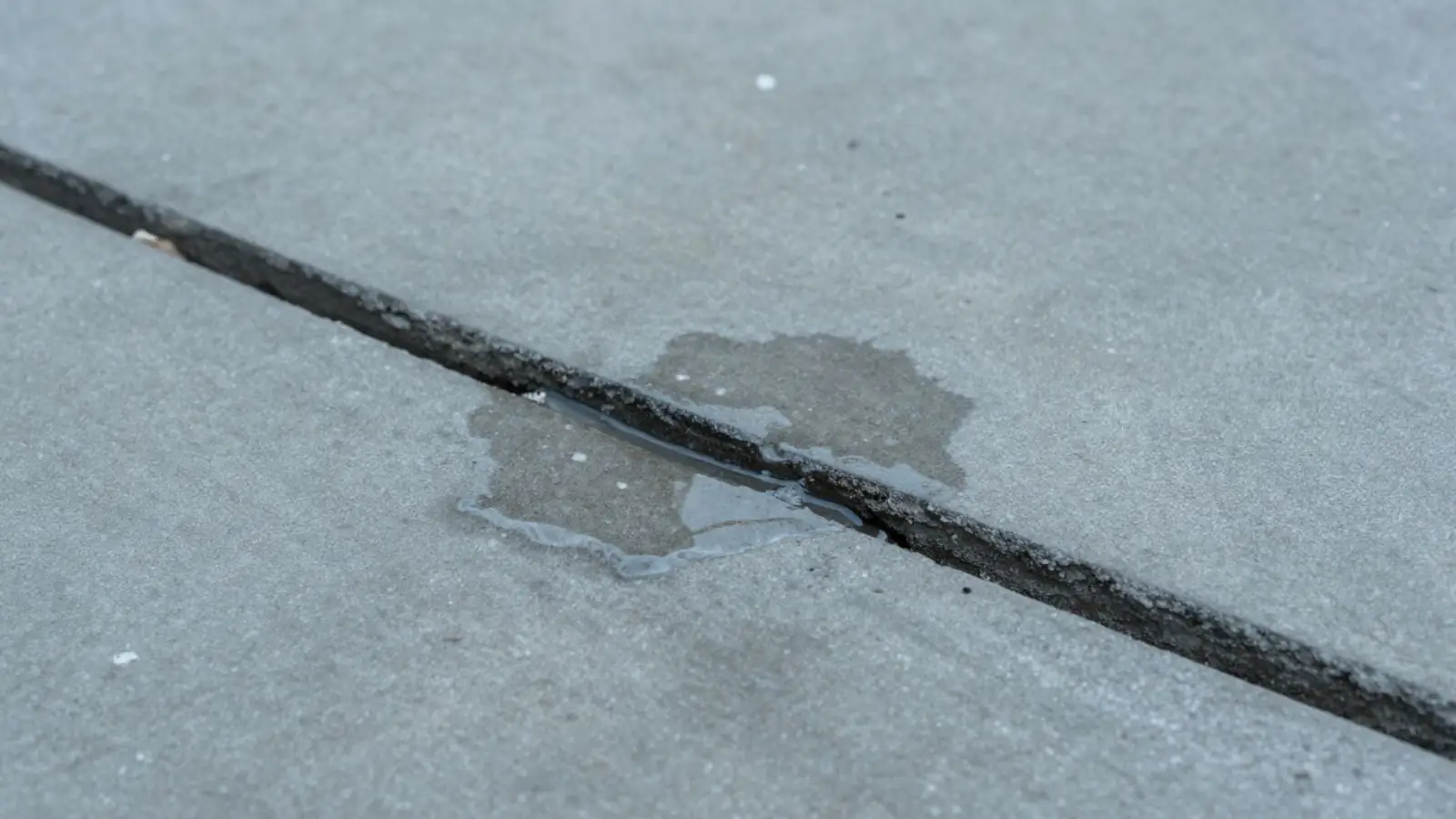
A slab leak means a water supply or drain line is leaking inside or beneath a poured concrete slab. In Littleton, CO, this is the uncommon case. Most homes here have a basement or a crawl space, so the pipes run in the open overhead where a leak shows up fast.
Slab leaks do happen in slab-on-grade additions, attached garages, some ranch homes and in basements where lines were cast into or buried under the floor. If your leak is in a basement, our basement water damage page covers the common version, and general incidents are covered under water mitigation.
When a slab leak is an emergency
A hidden leak under concrete runs around the clock, and the water has nowhere to go but sideways into flooring, framing and the soil below. Treat it as urgent if you hear running water with every tap closed, see wet carpet on a slab floor or find the floor warm in one spot.
A pressurized line can saturate a room in a day. Call our 24/7 line and we will dispatch when a crew is available, and we will not promise an arrival time before we know the schedule.
Signs of a slab leak and what each one means
| What you notice | What it may mean | First move |
|---|---|---|
| Warm or hot patch on the floor | A hot water line leaking under the slab | Shut off the water heater and call a plumber |
| Meter keeps moving with taps closed | A pressurized line is losing water somewhere | Close the main and watch the meter |
| Sound of running water at night | Supply leak or a failed fitting | Close the main and listen again |
| Damp carpet or lifting flooring over concrete | Water is wicking up through the slab | Pull furniture off and call us |
First hour safety steps
- Find the main shut-off and close it. Most single-family homes have it in the basement or utility area.
- If water is near outlets, appliances or the panel, keep clear and cut power only from a dry spot. Call 911 or your utility if you cannot do that safely.
- Photograph the floor and any meter reading before anything is moved.
- Call a plumber or leak-detection trade, then call us to start drying.
Do not break the slab yourself
Cutting into concrete can hit a live line, a gas pipe or wiring. Leave that to the trade that finds the leak.
How we dry a wet slab floor
Concrete is porous and holds water far longer than carpet or paint. We start by mapping moisture with meters and a thermal camera so we know how far the damp has traveled before we pull anything out.
Map the moisture
Meters and thermal imaging show the damp edge on floors, baseboards and the lower wall.
Remove what cannot dry
Soaked carpet pad, baseboard and the base of wet drywall come out so the slab can breathe.
Set drying equipment
Air movers push dry air across the surface while LGR or desiccant dehumidifiers pull moisture from the room.
Monitor daily
We recheck readings each visit and adjust the equipment until the slab and framing reach dry targets.
ANSI/IICRC S500 is the published reference for water damage restoration. We do not repair pipes, break concrete or reroute lines. That belongs to a plumber or a leak-detection trade, and the city may require a permit for plumbing work.
Wet slab floor or a mystery spike on the water bill? Call the 24/7 line and describe what you found.
Call (303) 952-8295What changes the cost of slab leak drying
- How much of the slab surface and flooring is wet.
- Whether carpet, pad, engineered wood or tile is involved.
- How long the leak ran before anyone noticed.
- How many days the slab needs to reach target readings.
We explain the scope and price before any work starts, so you can compare it against what the plumber says about the repair.
Insurance questions after a slab leak
Colorado Division of Insurance advisories say burst pipes and the resulting water damage are generally covered under homeowners and renters policies. They also tell policyholders to contact the insurer quickly and to get its instructions before repairs, while still taking steps to prevent more damage.
A leak that ran for months can be treated as gradual, and gradual damage is often not covered. Ask your insurer how it handles the pipe repair and the damage separately, and ask about deadlines.
Mistakes to avoid with a hidden leak
- Ignoring a small rise in the water bill for several weeks.
- Laying new flooring over a slab that has not been checked for moisture.
- Drilling or cutting concrete to chase the leak.
- Skipping photos of the floor and meter.
Littleton, CO: soil movement and permits
The Colorado Geological Survey notes that expansive clay soils lie under much of the plains where most Coloradans live, and they begin to swell once they get wet. Poor drainage is a common problem. Cracked floor slabs are among the common signs of soil movement, so a cracked slab near wet flooring is worth showing to your plumber.
The City of Littleton Permit Center, at 303-795-3751, requires a permit to install, alter, repair or replace any plumbing system. If the repair involves cutting into the slab and rerouting a line, ask the Permit Center whether your case needs one before the plumber starts.
Census QuickFacts puts the owner-occupied rate at 61.2 percent. If you rent, tell your landlord first, since the line repair and claim may be theirs.
Sources: Colorado Geological Survey, City of Littleton Permit Center page, Census QuickFacts.
We also dispatch to Lone Tree and Aurora for wet-slab calls. Once the slab and framing are dry, water damage repair covers the rebuild.
Common questions
Yes, though a slab leak is often found by a rising water bill rather than a flood, so most calls are about wet flooring. The line stays open all hours and crews go out when available, with no arrival time promised. A leak detection trade finds the line itself.
No. A plumber or leak-detection trade locates the line and repairs or reroutes it. We dry the flooring, baseboards, wall bases and the slab surface and document the moisture.
A warm floor patch, a running water sound with taps closed and a moving meter all point that way. A plumber can confirm it with a pressure test or leak-detection tools.
Concrete dries slowly, and the flooring on top traps moisture against it. Without equipment and readings you cannot tell when the slab is truly dry.
Most local homes have basements or crawl spaces, so slab leaks are less common. They appear in additions, garages and floors with lines cast in or under concrete, often where soil movement has stressed the pipe.