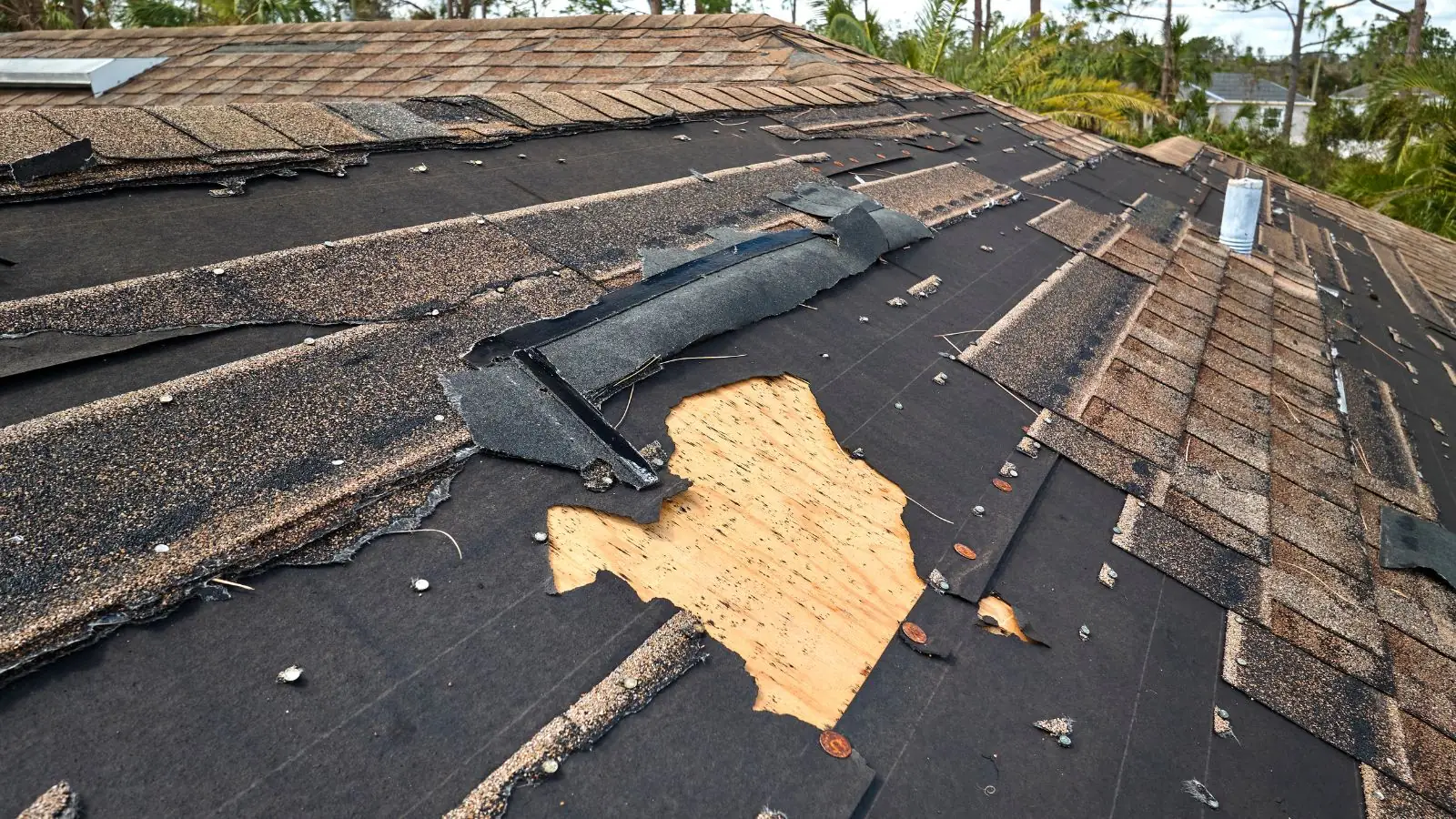
A storm rarely sends water in by only one route. Hail can crack shingles and break a window while wind pushes rain sideways into a wall, and meanwhile a window well fills and the sump pump loses power. Storm water damage is the name for that mix, and the first job is working out which routes are open.
Call our 24/7 line from somewhere safe and dry. We use your answers to decide whether you need drying, flood cleanup or a roofer, and we say so plainly.
How storm water enters a Littleton, CO home
- Hail damage that opens roofing, skylights or vents.
- Wind-driven rain forced past window frames and siding.
- Window wells that overfill and spill over the sill.
- Grading that slopes toward the house and sends runoff to the basement wall.
- Sump pumps that stop when the power goes out in the same storm.
When storm water is an emergency
Treat it as an emergency when water is actively entering, a ceiling is sagging, electrical gear is wet or the basement is taking on water. Storm water often carries soil and debris, so it is not clean water, and porous materials soaked by it should be handled with care.
If water is rising from outside the house, such as a creek, a flooded street or groundwater coming through a wall, that is a flood, not a leak. Read our flood damage restoration page and call at once.
| What you see | Likely source | Where to start |
|---|---|---|
| Water dripping from a ceiling after hail | Damaged roofing or a vent | Roof leak page, roofer for the cause |
| Wet wall under a window, rain was windy | Wind-driven rain past the frame | Dry the wall, then window repair |
| Water over the sill of a basement window | Overfilled window well | Extract and dry, drainage contractor for the well |
| Water rising outside and entering | Flooding from a creek, street or ground | Flood restoration, leave if unsafe |
Safety steps for the first hour of a storm
- Stay out of any basement with standing water until you know the power is off.
- Do not touch outlets, cords or appliances that are wet or sitting in water.
- If water is near the panel, leave and call 911 or the utility before you call us.
- Photograph every wet area, then call your insurer and our 24/7 line.
Wait out lightning before you go outside
Do not check a window well or clear a gutter mid-storm, and do not wade into water you cannot see through.
How we dry after a storm
Triage the entry points
We ask where water got in, then use moisture meters and a thermal camera to find what is wet.
Extract and remove
Extraction units pull standing water, and soaked carpet pad, insulation and low drywall come out.
Clean what stayed wet
Surfaces touched by storm water are cleaned before drying equipment is set.
Dry the structure
Air movers and LGR dehumidifiers run until readings reach the target, and we log them daily.
Storm water inside? Call the 24/7 line and tell us where it entered.
Call (303) 952-8295What changes the cost of storm damage
- How many entry points there were and how many rooms they wet.
- Whether the water was clean rain or carried soil from a yard or street.
- Finished basement materials versus bare concrete.
- The equipment needed and the number of days it runs.
We explain the scope and the price in plain language before we start. Standing water removal is covered on emergency water removal, and the repair of hail-damaged openings belongs to a roofer or window contractor, not to us.
Insurance: storm, flood and plumbing are different lines
Wind-driven rain and hail damage are often handled under a homeowners policy, but rising flood water usually is not. FEMA's flood insurance program notes that most homeowners policies do not cover flood damage and that a flood policy typically has a 30 day waiting period. The Colorado Division of Insurance says the same about most property policies.
A sump pump that fails during a storm may be treated differently from a burst pipe. Ask your insurer which line your loss falls under, and ask about deadlines.
Prevention and mistakes to avoid
- Do not assume a dry-looking wall is dry, because storm water can sit inside a cavity.
- Do not wait for the next storm to clear gutters and downspouts.
- Do not start repairs before your insurer gives instructions.
Littleton, CO: the 1965 flood and local floodplains
The South Platte River flood of June 16, 1965 reached Littleton at about 110,000 cubic feet per second, and the city lost about 80 homes and 72 trailers. Chatfield Dam was built from 1967 to 1975. A dam lowers flood risk but does not end it, so check your own address on the FEMA map.
Littleton has FEMA and local floodplains, regulated the same way, and work in one needs a Floodplain Development Permit. The 1978 FEMA study lists Big Dry Creek, Lee Gulch and Slaughterhouse Gulch as flooding sources. Call the floodplain administrator in Public Works at 303-795-3863 before you grade, build or fill near any of them.
NWS Boulder puts Denver's normal annual precipitation at 14.48 inches, a metro figure rather than a Littleton reading. In a dry climate, a few heavy storms do most of the damage, so test the sump pump and clear window wells before the season begins.
Sources: Littleton Museum history page, Mile High Flood District, City of Littleton floodplain pages, State CWCB archive of the FEMA study, NWS Boulder annual summary.
Our crews also cover Morrison and Denver after storms. For published drying guidance, ANSI/IICRC S500 is the reference, and you can ask any company whether its crews follow it.
Common questions
Yes, calls are taken during and after storms. Demand rises when a front moves through, so we send crews in the order of need and do not name an arrival time. The dispatcher helps you sort out what to protect first.
A leak enters at one point, such as a roof or a pipe. A flood rises from outside, through a basement wall, floor or window well. If water is rising, read our flood page and call.
No. Roofers and window contractors handle that work. We dry the interior, and our moisture notes can help them find the entry point.
Stay out of a basement with standing water until power is off. Call us to extract and dry, and call an electrician or plumber for the pump itself.